Best Paver Sealer in Arizona (2026): What the Pros Actually Use
Why pros moved away from acrylic
For years acrylic was the default, and a lot of online advice still calls it the “professional” choice. That's outdated. Acrylic is cheaper and easy to apply (popular for DIY), but in Arizona's sun, monsoon rain, and heat cycling it has real weaknesses:
- It doesn't last: reapplication every 1 to 3 years.
- It turns white: “blushing” is the most common sealing failure: the sealer clouds when moisture is trapped under a film that can't breathe. Acrylic is especially prone in hot, wet conditions.
- It's a softer film with less resistance to chemicals, oil, and abrasion.
Acrylic vs. water-based 2-part polyurethane
| Factor | Acrylic | Water-based 2-part polyurethane |
|---|---|---|
| Lifespan | ~1 to 3 years | ~3 to 5+ years |
| Durability | Softer film, less chemical resistance | Crosslinks into a hard, UV- & chemical-resistant film |
| White haze / blushing | Prone when moisture is trapped | Breathable, resists whitening in rain & heat |
| Safety / VOC | Often solvent-based, higher odor | Water-based, low-VOC; pet- & plant-friendly once cured |
| Joint sand | Limited stabilization | Locks/hardens sand; resists washout, weeds, ants |
| Finish | Good color, varied gloss | Deep color, dries clear, antifungal options |
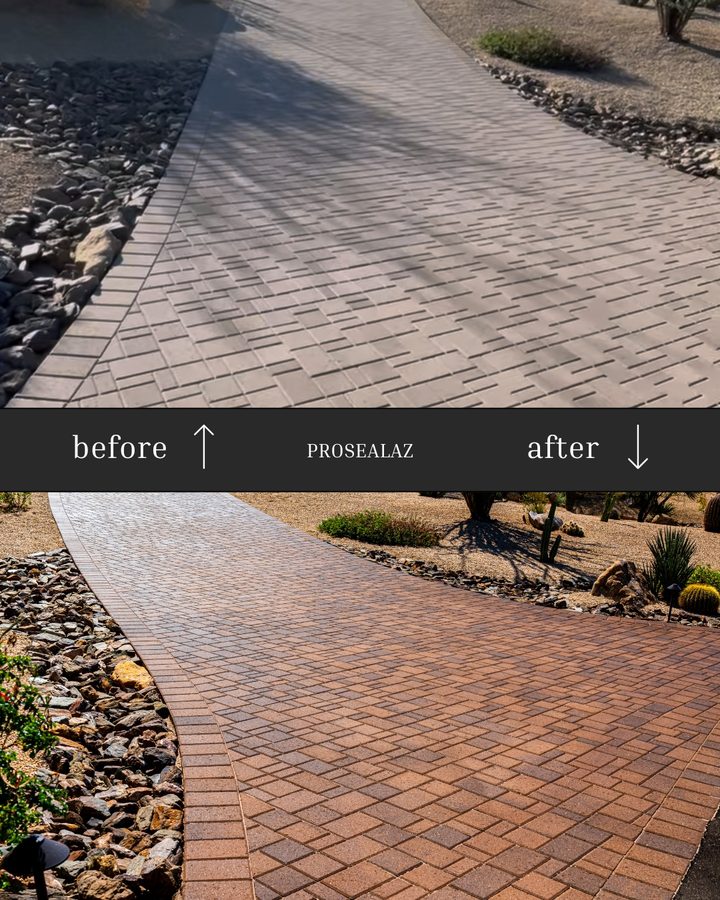 Before
 After
After
The two-part urethane systems pros trust
A “two-part” sealer comes as two components, a resin and a catalyst/hardener , mixed right before applying. They crosslink as they cure, which is why the film is far tougher than single-part acrylic.
- Trident Hurricane CAT 5: concentrated, water-based two-part urethane. Goes on milky, dries clear, hardens joint sand to prevent washout, enhances color with a high-gloss option, and includes an antifungal that resists mold, moss, and algae.
- Surfacelogix Cobble Loc: two-part, water-based clear sealer that gives a solvent-look finish in a low-VOC formula. Locks down joint sand, resists weeds and anthills, and comes in multiple sheens, with or without a non-slip additive.
“But isn't acrylic the professional-grade option?”
Acrylic isn't garbage, for a low-budget DIY job it can be fine. But the standard among Arizona's serious paver-sealing companies has shifted to water-based two-part urethane because it lasts longer and looks better for longer in desert conditions.
What about pets, plants, and VOCs?
Water-based two-part urethanes are low-VOC and water-based: low odor during application, and friendly to pets, plants, and family once fully cured. Keep pets and kids off until cured (usually 24 to 48 hours).
How we apply it
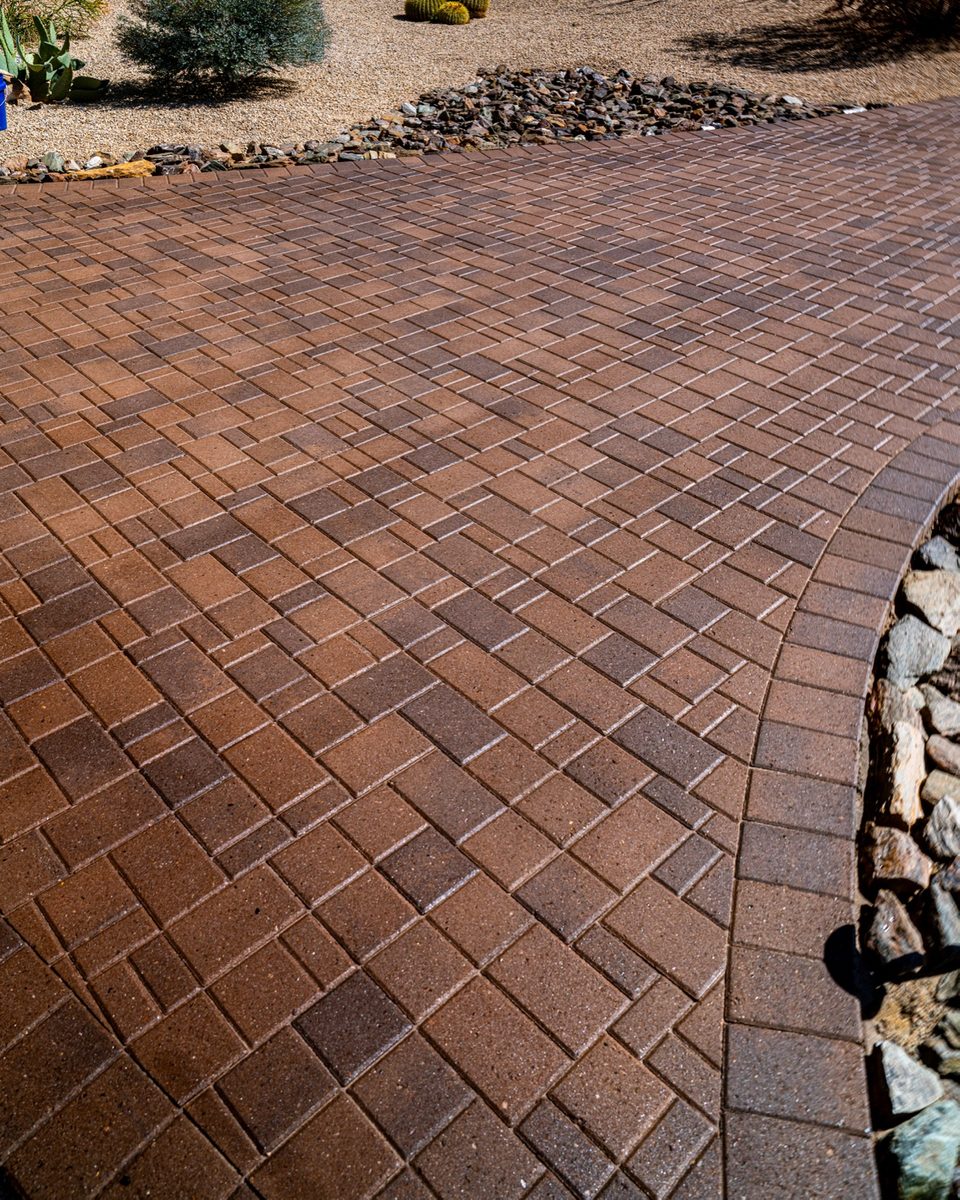
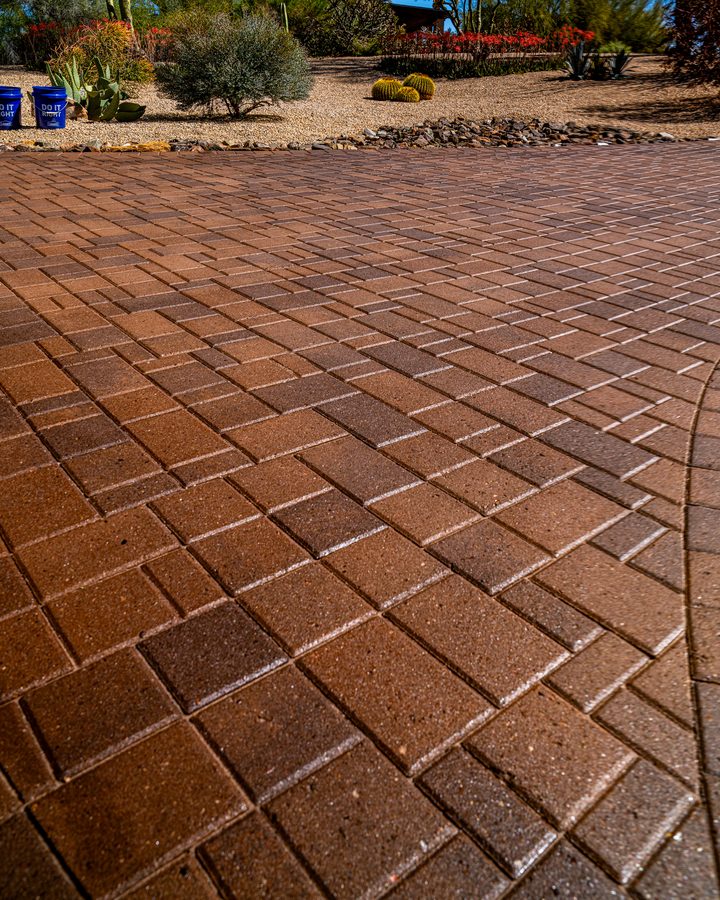
Because it's a two-part product, we mix the resin and catalyst on site right before application, so the sealer crosslinks as it cures into one hard, continuous film. We work it in even, controlled coats, locking and hardening the joint sand, enhancing color, and avoiding the lap lines and thin spots that cause uneven wear. You also choose the finish/sheen: Natural for a low-sheen, true-to-stone look; Ultra for a richer, satin enhancement; or Super for a high-gloss, wet-look shine. All three protect equally, the difference is purely appearance.
Bottom line
Skip the generic “acrylic is best” advice. The professional standard is a water-based two-part polyurethane like Trident Hurricane CAT 5 or Surfacelogix Cobble Loc, longer-lasting, more durable, resistant to white blushing, and safe for your household once cured.
Frequently asked questions
What is the best paver sealer for Arizona?
Is acrylic or polyurethane better for sealing pavers?
How long does paver sealing last in Arizona?
Is paver sealer safe for pets and plants?
Why did my paver sealer turn white?
Get a free quote
Pro Seal AZ uses professional-grade water-based two-part polyurethane on every job. Get a free quote.